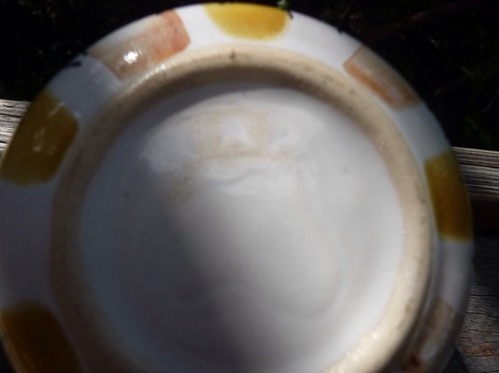
Ramekin is thought to come from a Dutch word for "toast" or the German for "little cream."


Name

Ramekin

Variant

Ramequin, Ramekin dish.

Pronounced

(ram′ə kin)[RAM-ih-kihn]ræməkin

Function

English Noun

Plural

Ramekins

Hypernym

A type of dish

Purpose

Cooking

Etymology

French Ramequin from Low German ramken, diminutive of cream, circa 1706. middle Dutch rammeken (cheese dish) dialect variant of rom (cream), similar to old English ream and German rahm. Ancient French cookbooks refer to ramekins as being garnished fried bread.


Meaning

1. A food mixture, (casserole) specifically a preparation of cheese, especially with breadcrumbs and/or eggs or unsweetened pastry baked on a mould or shell.

2. With a typical volume of 50-250 ml (2-8 oz), it is a small fireproof glass or earthenware individual dish similar in size and shape to a cup, or mould used for cooking or baking and serving sweet or savoury foods.

3. Formerly the name given to toasted cheese; now tarts filled with cream cheese.

4. A young child usually between the ages of 3 months and 11 years exhibiting a compulsion to force or "ram" their head into various objects and structures.

These days, a ramekin is generally regarded as a small single serve heatproof serving bowl used in the preparation or serving of various food dishes, designed to be put into hot ovens and to withstand high temperatures. They were originally made of ceramics but have also been made of glass or porcelain, commonly in a round shape with an angled exterior ridged surface. Ramekins have more lately been standardized to a size with a typical volume of 50-250 ml (2-8 ounce) and are now used for serving a variety of sweet and savoury foods, both entrée and desert.

They are also an attractive addition to the table for serving nuts,dips and other snacks. Because they are designed to hold a serving for just one person, they are usually sold in sets of four, six, or eight. Ramekins now are solid white, round, with a fluted texture covering the outside, and a small lip. Please bear in mind that whatever you ask for them on Internet auction sites, someone is still getting the same thing in an op shop for peanuts.

However, there are hundreds of decorative ramekins that came in a variety of shapes and sizes. They came in countless colours and finishes and many were made by our leading artists and ceramicists. My collection has ramekins with One handle only, fixed to the body at one point only. If it has no handle, it is a bowl. If it has two, it is a casserole dish. But the glory day of the Australian Studio Art ramekin is well and truly over. See some here, ask questions or leave answers.

P.S. Remember, just as real men don't eat quiche, real ramekins don't have lids or two handles. Also remember, two handles makes it a casserole dish. Also, please note If it aint got a handle, it's just a bowl.

P.P.S. To all you cretins who advertise your ramekins by associating them with "Eames" or "Eames Era". Get your hand off it, you are not kidding anyone. The Eames people have told me that they never made ramekins.

P.P.P.s To all the illiterates out there in cyberspace, just as there is no "I" in team, there is no "G" in Ramekin. I am the Rameking, they are ramekins.

If you have a set of Grandma's ramekins at the back of a kitchen cupboard, have a look through the site, maybe you will identify them. Thank-you for looking.

There are many of you out there that have knowledge of Australian pottery. Please let me know if you have anything that I can add to the notes. It is important to get the information recorded. You probably know something that nobody else does.

Please note that while your comments are most welcome, any that contain a link to another site will no longer be published.

-


Thursday, July 19, 2012

Bryce Chesney


Designer        
Bryce Chesney
Maker
Bryce Chesney
Marks
Stamped “BC” inside small fish shape to outside of base.
Material
Blue clay
Description
Large heavy earthenware bowl with tube handle. Clear gloss glaze to whole of body with blue check pattern flashing to exterior.
Condition
Good
Number
No number
Production Date
Early 1980s
Width at rim
130mm
Width at Base
95mm
Depth
65mm
Length (with handle)
177mm
Weight
450gm
Volume
500ml
Acquisition
E-Bay 19th July 2012
Rameking Reference Number
BCH 001-002

Reinvention could be the word for Bryce Chesney because he has had several careers in an eventful life.  Born in 1930 in Tully, Queensland to father, Alexander Hugh Chesney and mother Margaret, Bryce showed an artistic side from an early age, winning an orchid-growing prize in his early primary school years.  He also won a prize for his kelpie dog.

His father served in the Royal Australian Air Force for a short time during World War II then after buying a motor garage, began making and selling caravans in Queensland, or trailers to my American friends.  Check out Chesney Caravans on the interweb and see what they built.  Young Bryce joined brothers Neil (who still travels around in caravans) and Frank and began working there as a fitter and continued on in various capacities for many years until the early 1970s when he studied to become a Minister of religion.  Around 1980, he and wife Valerie moved to Sydney where he taught himself pottery-making. 

Bryce used a modification of the early Christian symbol of the sign of the fish or Icthys, His work was marked with a stamped impressed BC inside the fish and may (or in the case of these ramekins) may not have his incised signature.  These are large wheel thrown earthenware ramekins dating from the early 1980s.  Bryce made pottery on and off for the next fifteen years until his retirement in the mid 1990s.  He and Valerie now live in a retirement home near Maroochydore in Queensland.

I hope I have got this right, if not, could one of the Chesney's give me some more information.

Friday, July 13, 2012

Elischer


Designer        
Johan Wolfgang Elischer
Maker
Elischer
Marks
Incised “Elischer” to base
Material
Glazed slipware
Description
Handled press moulded bowl with dimpled base.  Harlequin glaze to interior with clear gloss glaze to entire body.  Hollowed press moulded  handle to top of bowl.
Condition
Good.  Some staining to age crazed area on inside of bowl.  Slight chipping to rims.  Some dark marking to footring
Number
No number
Production Date
Early 1950s
Width at rim
110mm
Width at Base
70mm
Depth
47mm
Length (with handle)
166mm
Weight
180gm
Volume
250ml
Acquisition
Chapel Street Bazaar
Rameking Reference Number


Which came first, the chicken or the egg?  This question springs to mind when looking at some of these ramekins.  Why? Because they look so much like others made by Diana or Seaton Grant back in the early 1950s.  Just look at the shape of the handles.  As I have said elsewhere on the Blog, design copyright was viewed somewhat more flexibly in those days. 
 
Elischer Pottery was started in Sandringham in 1947 by well-known sculptor John (Johann Wolfgang) Elischer (1st September 1891 to 24th January 1966) and his son, also named John, (real name Wolly).  John (Snr) was born in Vienna and trained at the Academy of Vienna from 1908 to 1911 and was an Associate of the Royal Academy Vienna. It was reported that he won the Prix de Rome in 1909. This was a scholarship for art students, offered by a number of countries. 

Even though his name does not appear on any of the list of winners, he may have been awarded a second prize. This is no shame because Manet and Monet both failed to win the Prix de Rome.  Although, their records show that there is no prizewinner listed under the painting category for 1909. Johan later studied in Paris (1910-1911) under the even more famous August Rodin.

After serving with the Austro-Hungarian forces in World War 1, he practiced as a sculptor in Vienna and designed figures for Austrian porcelain factories.  In 1924, he became the Art Director at Dittman-Brunner, an Austrian light fitting and novelty manufacturer.  He won an international competition in 1926 to design a memorial in Pretoria, South Africa for General Botha.  An excellent example of his early smaller work, the sculpture, 'Foundryman' is held in the Eckhart G. Grohmann Museum at the Milwaukee School of Engineering. This piece captures the intense concentration and skill involved in pouring metal.

John migrated to Australia in mid November 1936 with his sister Edith aboard the “Orama”. While living in Douglas Street Toorak in 1951, John won the 200 guinea prize ($420, about two months wages of the day) for a design for a jubilee medal for Australian Primary School and pre school children.  There is a medal on the table with his ramekins in another post.  The medal was given to the school children of Australia in 1951 to mark the fiftieth anniversary of the Federation of Australia. 

The design was chosen after a competition, with the valuable cash prize of two hundred guineas, won by John for his depiction of a man hand-sowing wheat. The wheat represents the seven States of Australia on the other side of the medal, at left 1901, at right 1951 in tiny letters near ground right, J.W.E. (obverse) Some of his notable sculptures are busts of Archbishop Daniel Mannix and Television great Graham Kennedy in clay.


At a meeting of the University Conservatorium Old Students, in November 1937, He said; "The origin of creative art is longing. Nature has given us all the incentive to mould, form, or create in one way or another. A child at play is only employing the creative urge it feels within itself, and an artist is nothing but a big child”. Elischer, P. Hurry and John Farmer together held an exhibition of works at the Atheaeum, Collins Street Melbourne, in June 1937. The catalogue lists 10 pieces of sculpture by 'John Wolfgang Elischer, A.R.A. (Associate of the Royal Academy) (Vienna)' (Copy in Museum Victoria History and Technology Department.


In early October 1938, John’s two sons Kurt Frederick and Hans W (Wolly) arrived in Melbourne aboard the “Oronsay”. Wolly, who spoke no English, was apprenticed to his father and studied sculpture, since, as a child he was fond of modelling. Wolly joined the Scouts, an organization he belonged to in Austria before it was banned by the Nazis. Both boys were keen athletes.  Also in 1938, his mother Anna died. She had been one of Franz Lizst's last students and was a renowned concert pianist.


Elischer also received commissions for sculptures including the King George V Memorial in Bendigo (1938). The statue was unveiled in September 1939 by the then Premier of Victoria, Mr Dunstan amidst complaints that local materials had not been used in the making of the statue.He also made a bronze fountain for businessman and philanthropist Sir Russell Grimwade in Toorak. After seven years in Australia, John applied to become a naturalized Australian in 1943. Austria, Australia, only a couple of letters different. In 1946 Huntley Pottery in Glenhuntly began making slip cast items designed by John Elischer.

John (Senior) died on the 24th of January 1966 age 74 and the business was continued by his son John (Wolly), until 1987 when it was sold.  Wolly died on the 9th of July 2001 age 77.  Both were cremated at the Springvale Botanical Cemetery.  Prior to that, at some time, Wolly started making pieces with the brand NCP. The business continues today as “Unique Ceramics” at 31 - 33 Beaumaris Parade, Highett, Victoria. You probably have some of their stuff without knowing it. Have a look at the bottom of that ceramic port bottle of beer stein from the Dandenong Octoberfest.  In 2002, Elischer Street in Canberra was named in his honour. Unique Ceramics continues to use the “Elischer” brand today on some of their wares.


Monday, July 9, 2012

CAP Josef & Vlasta


Designer        
Josef and Vlasta Cap
Maker
Cap
Marks
Incised with a map of Australia with the letters CAP in capitals above the map.
Material
Glazed slipware
Description
Cream slipware straight-sided bowl tapering to a circular foot-ring.  Short stem handle angled upward from centre of body.  Decorated with alternating vertical pale yellow and brown stripes overpainted with strips of black and a patch of similar decoration to top of handle.
Condition
Very Good
Number
No number
Production Date
Late 1950s
Width at rim
100mm
Width at Base
60mm
Depth
57mm
Length (with handle)
135mm
Weight
240gm
Volume
250ml
Acquisition
E-Bay
Rameking Reference Number
CAP 001-004

Here is another something for my Slovakian reader.   These ramekins were made by Josef and Vlasta Cap in South Melbourne, Victoria.  Usually they used “Vlasta” as their mark but if you look hard, you can just see the word “CAP” above the incised outline of Australia on the base.  The shape is similar to some of the Ellis ramekins and the handle is pure Diana with the design screaming late 1950s.  Take a stroll through the antique barns around the traps and you will see examples of this type of pattern on any number of tacky vinyl seats.  They were bad taste then and they are bad taste now but are representative of their time.  There is no other use of this logo that I have been able to find on any other ceramics. 

The Cap Family was part of the great post-war migration from Eastern Europe. They arrived in Melbourne from Czechoslovakia in 1951.  Josef, born 23 July 1923; his wife Vlasta, born 15 October 1922 and son Miloslav born 9 July 1949.  Josef had trained and worked as a sculptor and ceramic artist for 5 years before being arrested by the Gestapo and put into a camp because  Josef had a school friend who was accused of being a British spy.  In those days, that was enough.  After his release Josef re-established his career from 1944 until 1948 when Josef and wife Vlasta applied to come to Australia.  Her maiden name was Kratchovil. (Yes, the Ellis Kratchovil)  Maybe that is where the idea for the shape came from.

Josef Cap

Following the war, Josef fell foul of the new communist regime and that is why he had to leave the country, but Josef had a heart condition and under normal circumstances would have been rejected.  Because he was described as an expert ceramic worker, he was accepted.  The Family came to Australia in 1951 and started a small pottery at 19a Bank Street South Melbourne, Victoria to capitalize on the desperate post-war shortage of home-wares and the upcoming Olympic Games in Melbourne 1956.  In those days, South Melbourne was a hive of Industry, now it is full of pony-tailed advertising types.  As well as ramekins, the Cap's also made other items such as vases

Vlasta Cap


Their old building is long gone and the site now is used as a car-parking garage.  They usually named their wares “Vlasta” after Mrs Cap, but that name is based on one of the amazons of Czech mythology. The name Vlasta is a girls name. The origin is Slavic with the meaning(s) depending on Gender/Origin being Slavic- Powerful Princess or Glorious Chief. It is the feminine form of Vladyslav.  Vlasta died in Heidelberg, Victoria in 1971 aged 40 and was cremated at Springvale on the 3rd of December 1971.

Thursday, June 7, 2012

Mystery Maker Marked J-I France


Designer        
Not known
Maker
Not known
Marks
Painted to base “J-I France
Material
Wheel-thrown Earthenware
Description
Shallow bowl with widened lip rounded handle and flat base.  Double glazed to interior of bowl. Sgrafitto leaf design through top glaze.  Dark matte contrast colour applied to inside top of rim 
Condition
Very good for age, some chips to rim of one bowl.
Number

Production Date
1960s
Width at rim
110mm
Width at Base
80mm
Depth
33mm
Length (with handle)
177mm
Weight
205gm
Volume
200ml
Acquisition
Vinnies, Edithvale, Victoria
5th June 2012
Rameking Reference Number
JIF 001-002

Seemingly made for fondue, they are made from earthenware, which is a porous ceramic, usually hand-made clay (inorganic non-metallic solid) fired at a low heat, (1000-1150 degrees Celsius) usually glazed to the interior of a bowl to retain contents by making it impervious to liquids.  Majolica, Delft and Faence ware are examples of Earthenware.  Particle size can vary.  Firing temperature may vary depending on the type of material used.

These ramekins have been double glazed so that a leaf pattern can be seen by exposing the darker underglaze.  It is likely that because of the hole in the handle, they form part of a rustic style fondue set so popular in Europe in the 1960s and 70s.  A fondue is a dish of Swiss origin, also popular in France and northern Italy.  It is shared from a single pot that is heated over a small flame.  Usually the contents are either cheese mixed with white wine, or chocolate, although other items can also be used.  Food, such as bread or fruit on long forks is dipped into the pot containing the melted cheese or chocolate. 

Rameking Romance tip; Gentlemen who wish to improve their chances with the ladies would be well advised to resurrect a fondue set.  Not the cheese dip that will have them run a mile, but with melted chocolate.  If you have got her to your place, she is already interested.  Get her to dip strawberries into hot melted chocolate and you on a winner.  Ladies love a man that cooks, and they love chocolate even more.  Team it with fruit, preferably strawberries, and they think it is healthy.  Team it with a mug of hot chocolate on a cold winter evening.  In ladies, the chocoholic gene is far more developed and responsive than in gentlemen.  Gemutlichkeit in German means cosiness or feeling pleasure in a comfortable environment and a fondue for two does that in spades.

Try this recipe;


Tuesday, June 5, 2012

Fris (N.V. Keramik Industrie Fris) Edam


Designer        
Willem Hendrik DeVries
Maker
NV Ceramic Industry Fresh
Marks
Stamped “Made in Holland Fris Edam” to base
Material
Porcelain
Description
Press moulded straight-sided bowl angling outwards to top.  Bottom half with vertical fluting. Short curved handle angled upwards from fixing at center of bowl. Grey gloss glazed interior with single varied colour to exterior.
Condition
Very good for age, slight chip to footring of one bowl with slight discolouring to interior.
Number

Production Date
Late 1960s
Width at rim
117mm
Width at Base
85mm
Depth
60mm
Length (with handle)
143mm
Weight
180gm
Volume
370ml
Acquisition
Salvo Store, Noble Park, Victoria
Rameking Reference Number
FRI 001-004


Designer        
Willem Hendrik DeVries
Maker
NV Ceramic Industry Fresh
Marks
Stamped “Made in Holland Fris Edam” to base
Material
Porcelain
Description
Press moulded straight-sided bowl angling outwards to top.  Short flat curved handle angled upwards from fixing at center of bowl. Off-white gloss glazed interior with single varied matt colour to exterior.
Condition
Very good for age, slight discolouring to interior.
Number
No number
Production Date
Late 1960s
Width at rim
110mm
Width at Base
65mm
Depth
55mm
Length (with handle)
152mm
Weight
195gm
Volume
375ml
Acquisition
Salvo Store, Noble Park, Victoria
Rameking Reference Number
FRI 005-011

At the height of the Second World War, Gerrit Fris and his son, also named Gerrit began the “NV Art Pottery” Like many others before and since with no experience in ceramics, they bought in the talent.   They hired Willem Hendrik De Vries as their “Aesthetic Consultant”.   He remained with them until 1967.  From 1938 to 1968 he was teaching ceramics at the Institute of Applied Art in Amsterdam and joined NV Ceramic Industry in 1943, then located in Gouda.


They moved from Gouda to Edam in 1947 because of the post-war labour shortage in Gouda to premises formerly occupied by the staff canteen of the Fokker aircraft factory in Holland.  With the help of government grants and a pool of unemployed fishermen caused by the damming of the Zuider Zee, they opened a new works there on the 3rd of January 1947.  In 1951, demand exceeded supply.

From 1946 to 1969 Willem de Vries held the post of Director in design, which from 1947 was located in Edam, and with his talent, the pottery soon became a leading maker.  Other designers were Nel Bruynzeel, Dick Gerrits, Hannie Terpstra, Emile Truyen, Jan Lucassen and Floris Meydam as his deputy.  They made dinnerware and vases inspired by the Bauhaus with an emphasis on utility, quality and design; colour was important.  De Vries continued teaching during his time with Fris.

These ramekins are typical of his design influence and although missing the underplates, they hark back to the tea sets that were their first products in 1947.   The NV Ceramic Industry Fresh existed from 1947 to 1969.  Part of their design philosophy was that decoration was impractical and detracted from the design, diverting attention from the form.  They are a form of “Missing Link” with fluting making an appearance before the disappearance of the handle.

Pride of place had traditionally been the china cabinet.  Rows of plates, bowls and jugs stood proudly on shelves in dressers in most Dutch homes.  This trend tapered off as tastes changed in the sixties and as a result, ceramics production and sales in The Netherlands fell to only a fraction of that of the industry at its height.  If you see their dishes displayed at home then it is understandable that the utilitarian lack of decoration of Fris is not an asset.

Their stylish and balanced pottery is little known outside the Netherlands but is now collectable and some of their work is expensive.  By 1969, the company was bankrupt and was taken over by the Triangle Pottery.  Triangle changed its name in 1970 to “The Pottery House” and moved production to Lelystadt in 1988 where it continues as “New Land Pottery.”


Saturday, June 2, 2012

Holly Hobbie


Designer        
Holly Hobbie
Maker
WWA inc.
Marks
Stamp to base “Holly Hobbie Country Living Collection Stoneware and Ovenproof  WWA Inc MCMLXXXI Cleveland USA 44144 Made in Korea”
Material
Stoneware
Description
Heavy stoneware lozenge bowl with knob handled lid and long perforated closed ended knob handle Cream glaze to interior and exterior, unglazed flat base. Decal of Holly Hobbie character to exterior side of bowl with various homily sayings on side.
Condition
Very good
Number
No number
Production Date
1980
Width at rim
110mm
Width at Base
110mm
Depth
50mm
Length (with handle)
185mm
Weight
Ramekin 415gm, Lid 160gm.
Volume
375ml
Acquisition
1 on E-Bay 1 Jun 2012,
1 at Vinnies Oakleigh 30 May 2012
Rameking Reference Number
HOH-001-003


These ramekins were made for Holly Hobbie, a creation of Denise Holly Ulinskas born in 1944.  In 1964 she married author Douglas Hobbie and now lives in Conway, Massachusetts, USA.  She began drawing profile views of a little girl in a bonnet and rural style dress around 1968.  For many years she was a contract artist at the curiously named Humerous Planning Department at American Greeting Corporation Incorporated based in Brooklyn Ohio.  The character became very, very popular and a line of greeting cards soon followed.  Later the character was marketed under license in many ways by dozens of different companies, hence these ramekins.  She also authored the popular “Toot and Puddle’ series of books.  Holly Hobbie merchandise is now very collectable.

Look up Wikipedia for the (almost) full story and for much more detail, go to   www.hollyhobbieworld.com  For their ramekins, read on because they are part of their Country Living Collection that included various Canisters, a Teapot, Milk Jugs, Casserole Dishes, Tea & Coffee Cups, Egg Cups; Lidded Butter Dish, Salt Cellar, Salt & Pepper Shakers, (the ramekins also came with soup tureen (crock))

It appears that their range of this type of dinnerware was made between 1973 and 1982. As mentioned earlier, like many companies in America at the time, Holly Hobby licensed their products.  Anchor Hocking for their Ironstone and glassware, Chilton Globe for their cookware.  Anchor Hocking is still around, but Chilton Globe had a number of brands associated with them that have now all lapsed.  Chilton Globe (Far East) Ltd.  Hong Kong was established on the 4th of August 1971 and dissolved on the 11th of April 2003.  The Chilton Globe trademark is now owned from 30th May 1992 by Strombecker Corporation.  I think that their stuff was actually manufactured by the Chaozhou Chinaware Factory, Fenxi, Chaozhao, China.

These ramekins were made by WWA Incorporated.  It appears that they were sub-contracted yet again to a Korean maker as the design and making is similar to other Korean or Japanese ramekins.  The backstamp says “Made in Korea”.  The premier Korean manufacturer at the time was Haeng Nan who also made for Ji Stoneware.  The slip appears similar.

WWA inc stands for “World Wide Art Incorporated” an American company from Cleveland Ohio, USA who manufactured for Hollie Hobbie in the Republic of China, Japan and Korea during the 1970s and 80s, producing a variety of collectable ceramics including these ramekins.